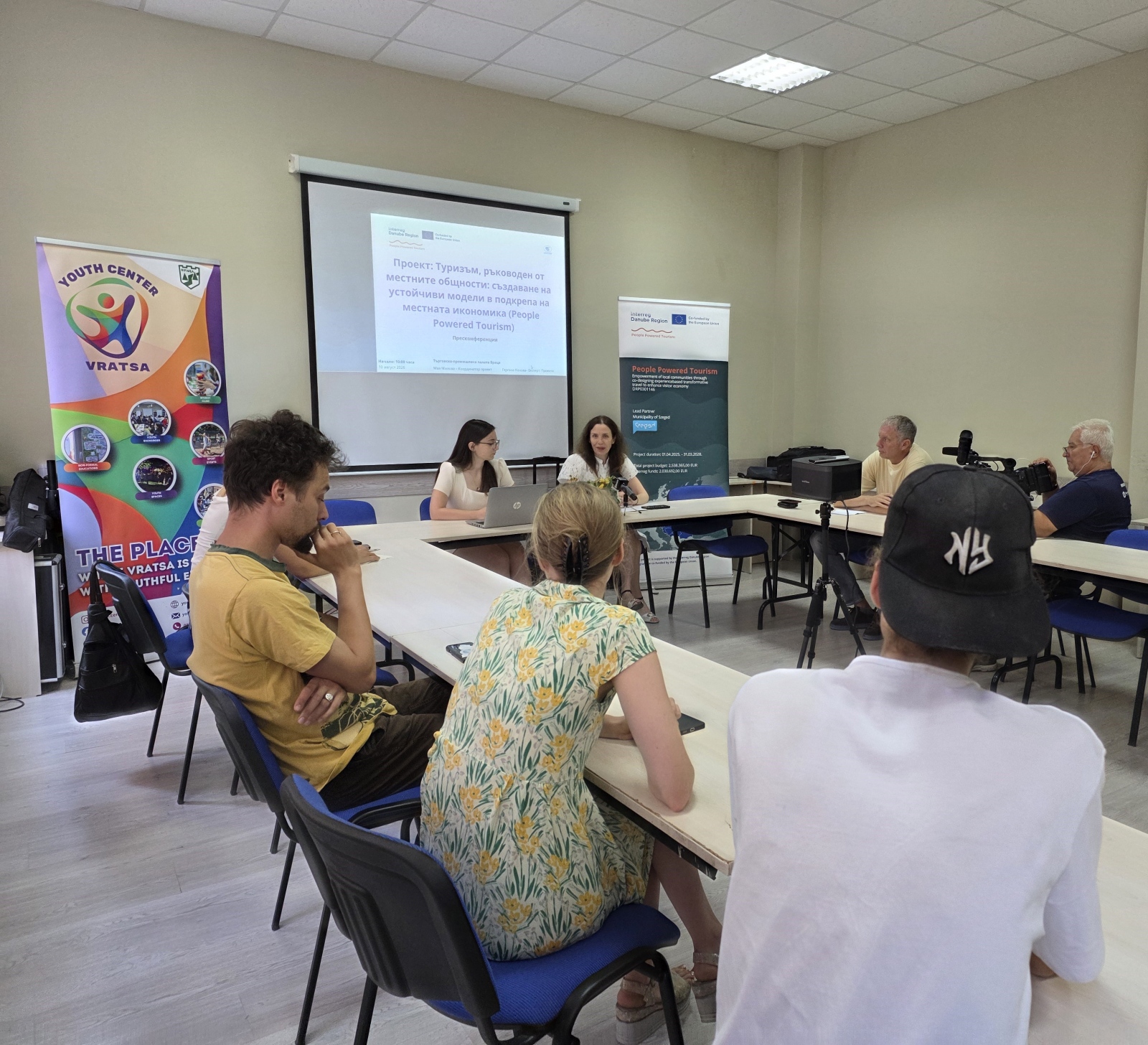
On 10 August 2026, the Chamber of Commerce and Industry Vratsa held a press conference within the project “People Powered Tourism: empowerment of local communities through co-designing experience based transformative travel to enhance visitor economy”, funded under the Interreg Danube Region Programme (DRP) 2021–2027.
The event, dedicated to presenting the principles of the visitor economy, the project activities and its main results, attracted significant interest from local media. Representatives of the Chamber of Commerce and Industry Vratsa presented the project’s objectives, the progress achieved so far and the new approach to tourism promoted through the initiative. This approach places human connections and personal experiences at its core and will be applied in the project’s two pilot locations – Bistrets neighbourhood and Zgorigrad village.
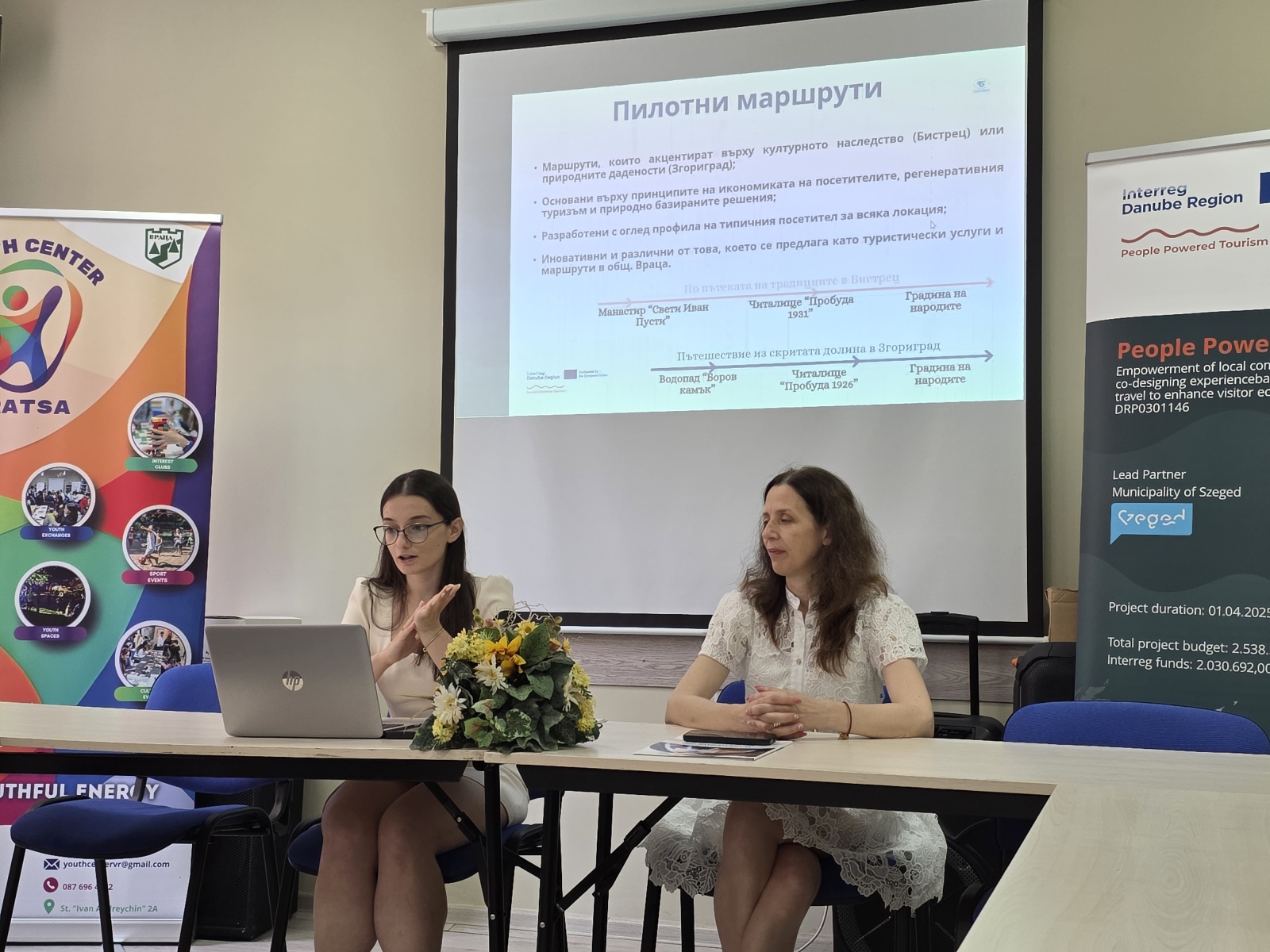
The two tourism routes developed within the project were also presented to the wider public:
“The path of traditions” in Bistrets, which includes a visit to the “St. Ivan Pusti” Monastery, a cooking workshop in the centre of the neighbourhood, and the planting of a flower in the local “Garden of world”;
“The Hidden Valley journey” in Zgorigrad, which includes a hike along the Borov Kamak eco-trail to the Borov Kamak Waterfall, a cooking workshop in the centre of the village, and the planting of flowers in the local “Garden of world”.
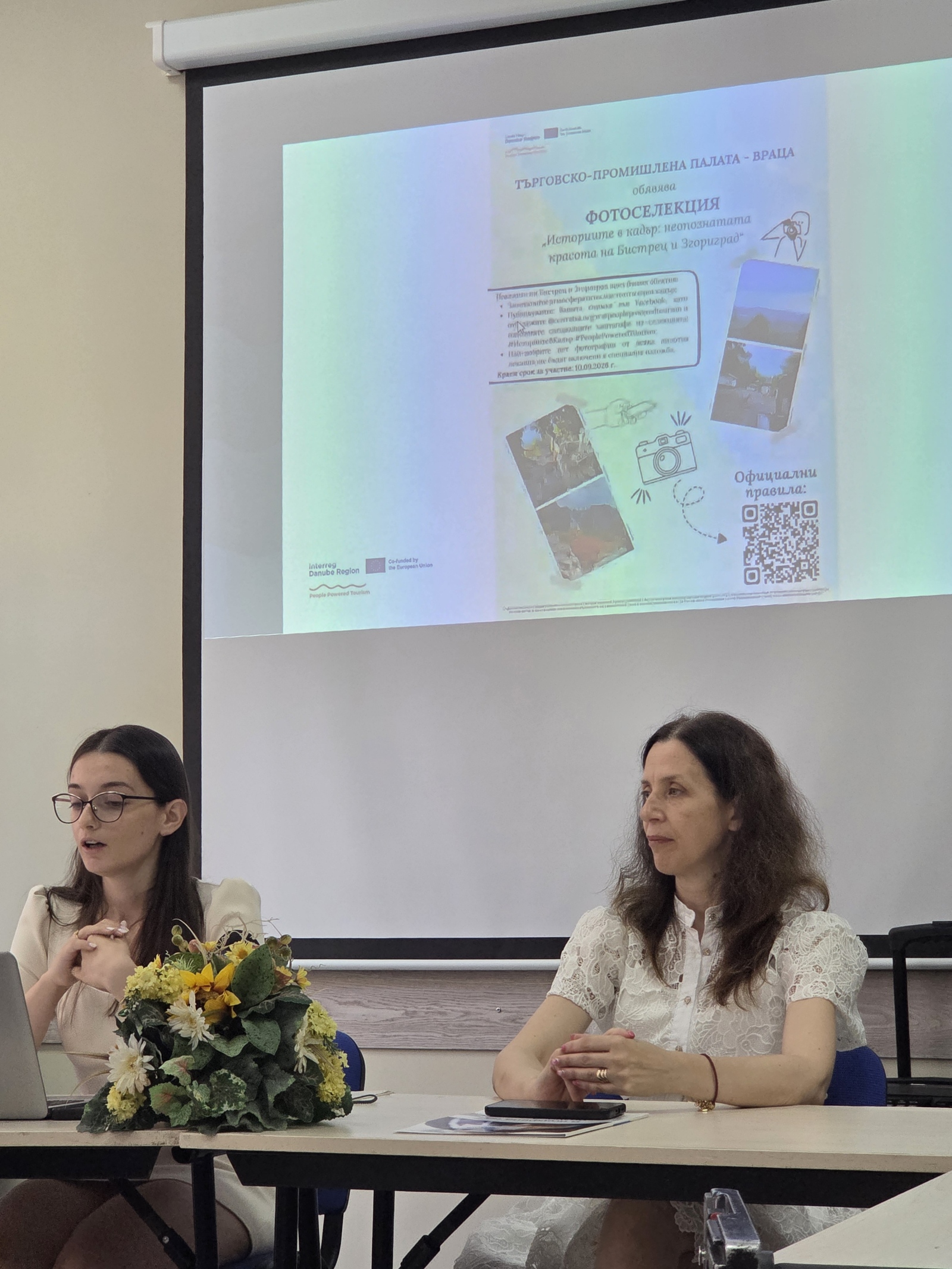
During the press conference, CCI Vratsa also announced the launch of the photo selection initiative “Stories in a Frame: The Undiscovered Beauty of Bistrets and Zgorigrad”, which will run until 10 September 2026. The initiative aims to encourage participants to visit one of the locations included in the pilot routes, capture it in a photograph and submit their image for participation. The five best photographs will be selected for inclusion in a special photo exhibition.
The partnership consists of 14 organizations from 10 countries in Central and Southeast Europe, led by the Municipality of Szeged (Hungary). The project addresses contemporary challenges in tourism by proposing a “visitor economy” model, which places visitors and local communities at the center of development. This approach positions people as the main drivers of sustainable development, emphasizing the importance of human relationships, local identities, and personalized experiences that generate added value for the local economy.